Starting off with What You Need to Know About Commercial Auto Policy Limits, this introduction aims to intrigue and inform readers, setting the stage with a balanced tone that unfolds naturally.
The following paragraph will delve into the specifics of the topic, providing detailed and comprehensive information.
Importance of Commercial Auto Policy Limits
Setting appropriate policy limits for commercial auto insurance is crucial for protecting your business and assets in case of accidents or damages.
Consequences of Having Insufficient Policy Limits
- Increased out-of-pocket expenses for repairs or medical bills
- Potential lawsuits and legal liabilities
- Risk of financial instability for your business
Approaches to Determining Ideal Policy Limits
- Evaluate the value of your business assets and vehicles
- Consider the average costs of auto accidents in your industry
- Consult with an insurance agent or risk management specialist
Scenarios Where Policy Limits are Crucial
- A delivery truck causing a multi-vehicle accident resulting in injuries
- An employee driving a company car involved in a serious collision
- A commercial vehicle causing property damage in a residential area
Understanding Coverage Types in Commercial Auto Policies
Commercial auto policies offer various coverage types to protect businesses from financial losses resulting from accidents or damages involving company vehicles. Understanding these coverage types is crucial in making informed decisions about policy limits.
Liability Coverage
Liability coverage is a fundamental component of commercial auto policies. It provides financial protection in case your business is held responsible for bodily injury or property damage caused by a company vehicle. Policy limits for liability coverage typically vary based on state requirements and the level of risk associated with your business operations.
Comprehensive Coverage
Comprehensive coverage protects your business vehicles from non-collision incidents such as theft, vandalism, or natural disasters. Policy limits for comprehensive coverage are usually determined by the value of the vehicle and the level of coverage chosen by the policyholder.
Collision Coverage
Collision coverage pays for damages to your company vehicle resulting from a collision with another vehicle or object. Policy limits for collision coverage are influenced by factors such as the age and condition of the vehicle, as well as the deductible chosen by the policyholder.
Uninsured/Underinsured Motorist Coverage
Uninsured/underinsured motorist coverage offers protection in case your business vehicle is involved in an accident with a driver who lacks insurance or has insufficient coverage. Policy limits for this coverage type can vary based on state regulations and the level of protection desired by the policyholder.
Factors Influencing Commercial Auto Policy Limits
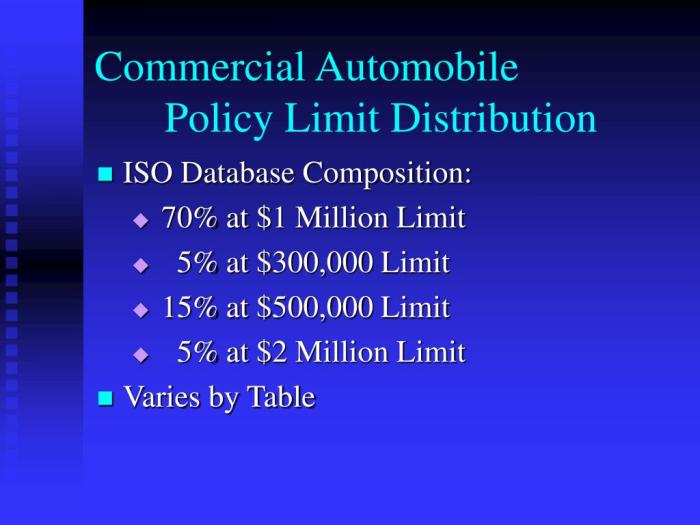
When it comes to determining commercial auto policy limits, insurers take into consideration several factors to assess the risk exposure and coverage needs of a business. These factors can vary based on the unique circumstances of each business and its operations.
Business Type Impact
The type of business a company operates plays a significant role in determining the appropriate policy limits. For example, a construction company with large trucks and heavy equipment may require higher policy limits compared to a consulting firm with a fleet of sedans.
Insurers will assess the potential risks associated with each business type to recommend suitable coverage limits.
- Construction companies with heavy vehicles and equipment may require higher limits to cover potential damages or injuries resulting from accidents.
- Consulting firms with smaller vehicles and lower risk exposure may be able to operate with lower policy limits.
Number of Vehicles Impact
The number of vehicles owned or operated by a business can also impact policy limits
- A business with only one or two vehicles may be able to maintain lower policy limits compared to a business with a dozen vehicles on the road daily.
- Insurers will consider the total number of vehicles in a fleet when determining appropriate policy limits to protect against potential liabilities.
External Influencing Factors
In addition to internal factors like business type and vehicle count, external factors can also influence commercial auto policy limits. These factors may include regulatory requirements, industry standards, and specific contractual obligations that a business must meet.
For example, a delivery company operating in a high-traffic urban area may face higher risks of accidents and therefore require higher policy limits to protect against potential lawsuits or claims.
Evaluating and Adjusting Policy Limits
When it comes to commercial auto insurance, it is crucial to regularly evaluate and potentially adjust your policy limits to ensure adequate coverage for your business. Here is a step-by-step guide on how to effectively manage your policy limits:
Evaluate Current Policy Limits
- Review your current policy documents to understand the limits of liability coverage for bodily injury, property damage, and other relevant aspects.
- Assess your business operations and determine if your current policy limits align with the potential risks and liabilities your company faces.
- Consider any significant changes in your business, such as expansion or new vehicle acquisitions, that may necessitate adjusting your policy limits.
Adjusting Policy Limits Based on Changing Circumstances
- Consult with your insurance agent or broker to discuss any changes in your business that may impact your insurance needs.
- Consider increasing your policy limits if your business has grown or if you are now transporting higher value goods or equipment.
- Explore options for adding additional coverage or endorsements to your policy to enhance protection against specific risks.
Review and Revise Policy Limits
- Set a regular schedule to review your policy limits, such as annually or biannually, to ensure they continue to meet your business requirements.
- Be proactive in revising your policy limits if you anticipate changes in your operations, such as increased mileage or expansion into new territories.
- Work closely with your insurance provider to understand the implications of adjusting your policy limits and make informed decisions based on your business needs.
Importance of Periodically Reassessing Policy Limits
- Periodically reassessing your policy limits helps ensure that your business is adequately protected against potential liabilities and losses.
- By staying proactive in evaluating and adjusting your policy limits, you can avoid being underinsured in the event of a claim or lawsuit.
- Regularly reviewing your policy limits also allows you to take advantage of any new coverage options or discounts that may be available to you.
Final Summary
Concluding with a succinct summary that encapsulates the key points discussed, leaving readers with a lasting impression.
FAQ
What are the consequences of having insufficient policy limits?
Insufficient policy limits can leave businesses vulnerable to financial losses in the event of accidents or lawsuits that exceed the coverage amount. It's crucial to set appropriate limits to ensure adequate protection.
How can businesses evaluate their current policy limits?
Businesses can evaluate their current policy limits by assessing their coverage needs, considering potential risks, and comparing it to industry standards or recommendations from insurance experts.
What factors do insurers consider when setting policy limits?
Insurers consider various factors such as the type of business, number of vehicles, driving records, and external risks to determine appropriate policy limits that provide sufficient coverage.