Exploring the differences between Functional medicine and traditional healthcare, this introduction sets the stage for an in-depth comparison that sheds light on the patient-centered approach of Functional medicine and the symptom-based focus of traditional healthcare.
As we delve deeper into the core principles and treatment modalities of both approaches, we unravel a compelling narrative that highlights the importance of personalized care and patient empowerment in Functional medicine.
Functional Medicine Overview
Functional medicine is a personalized approach to healthcare that focuses on treating the root cause of illnesses rather than just managing symptoms. It addresses the whole person, taking into account genetic, environmental, and lifestyle factors that can influence long-term health and chronic disease.
Core Principles of Functional Medicine
- Individualized Care: Tailoring treatment plans to each patient's unique needs and circumstances.
- Holistic Approach: Considering the interconnectedness of the body's systems and how they impact overall health.
- Patient Empowerment: Educating and involving patients in their own care to promote active participation in the healing process.
- Preventative Focus: Emphasizing proactive measures to prevent illness and optimize wellness.
Patient-Centered Approach of Functional Medicine
Functional medicine places the patient at the center of care, with a focus on building a partnership between the practitioner and the individual seeking treatment. This approach allows for a deeper understanding of the patient's health history, lifestyle habits, and goals, leading to more personalized and effective treatment plans.
Comparison with Traditional Healthcare
Functional medicine differs from traditional healthcare in its emphasis on uncovering and addressing the underlying causes of disease rather than solely managing symptoms. While traditional healthcare often relies on medications to alleviate symptoms, functional medicine aims to restore balance and optimize function in the body to promote long-term health and vitality.
Treatment Modalities
Functional medicine utilizes a variety of treatment modalities to address the root causes of health issues and create personalized treatment plans for patients. By integrating nutrition, lifestyle changes, and supplements, functional medicine practitioners aim to optimize the body's natural functions and promote overall well-being.
Common Treatment Modalities in Functional Medicine
- Nutrition: Emphasizing the importance of a balanced diet tailored to individual needs to support optimal health and healing.
- Lifestyle Changes: Recommending modifications in daily habits such as exercise, stress management, and sleep to improve overall wellness.
- Supplements: Using vitamins, minerals, and other natural substances to address specific deficiencies or imbalances in the body.
Integration of Treatment Modalities in Functional Medicine
Functional medicine practitioners combine various treatment modalities based on each patient's unique health profile, genetic makeup, and environmental factors. By considering the interconnectedness of body systems, they create personalized treatment plans that address the underlying causes of disease rather than just managing symptoms.
Contrast with Traditional Healthcare
In contrast, traditional healthcare often relies on medications and surgeries to treat symptoms without always addressing the root cause of the issue. While these interventions can be necessary in acute situations, they may not always provide long-term solutions or promote holistic wellness like functional medicine approaches do.
Patient Interaction
In functional medicine, patient interaction plays a crucial role in consultations, focusing on a more personalized and holistic approach to healthcare.
Typical Patient-Doctor Interaction
Functional medicine practitioners prioritize spending more time with patients during consultations compared to traditional healthcare providers
Importance of Patient Education and Empowerment
In functional medicine, patient education and empowerment are key components of the treatment process. Practitioners emphasize educating patients about their health conditions, treatment options, and lifestyle modifications to empower them to take control of their own health. This collaborative approach encourages patients to actively participate in their healing journey, leading to better health outcomes and long-term wellness.
Approach to Chronic Diseases
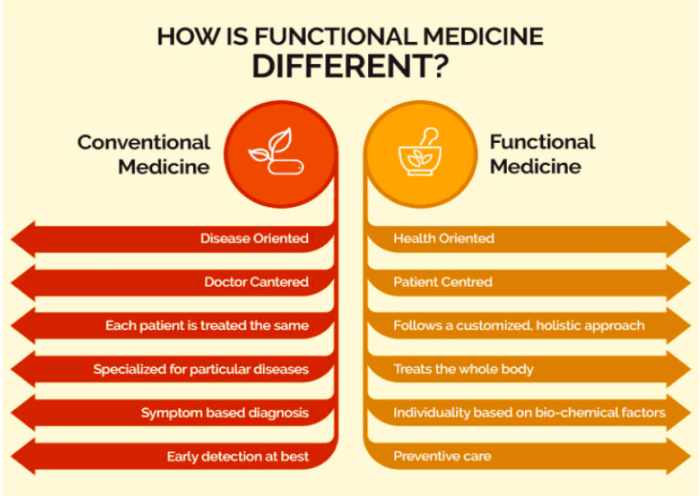
Functional medicine takes a unique approach to chronic diseases by focusing on identifying and addressing the underlying imbalances in the body that contribute to the development and progression of these conditions. Rather than just treating the symptoms, functional medicine practitioners aim to uncover the root causes of chronic diseases and restore balance to the body's systems.
Examples of Chronic Conditions Managed through Functional Medicine
- Autoimmune disorders such as rheumatoid arthritis, lupus, and Hashimoto's thyroiditis
- Metabolic conditions like diabetes and obesity
- Chronic digestive issues such as irritable bowel syndrome (IBS) and inflammatory bowel disease (IBD)
- Neurological conditions including Alzheimer's disease and multiple sclerosis
Limitations of Traditional Healthcare in Managing Chronic Diseases
- Traditional healthcare often focuses on symptom management rather than addressing the root causes of chronic diseases.
- Prescription medications may be used to alleviate symptoms but do not necessarily promote long-term healing or address underlying imbalances.
- Short appointment times in conventional medical settings may limit the ability to conduct comprehensive evaluations and develop personalized treatment plans for chronic conditions.
- Traditional healthcare may not always consider the interconnectedness of body systems and how imbalances in one area can impact overall health.
Last Point

In conclusion, the discussion on Functional medicine vs. traditional healthcare underscores the need for a shift towards holistic and individualized care that addresses the root cause of illnesses. As we navigate through the complexities of chronic diseases and patient-doctor interactions, it becomes evident that Functional medicine offers a promising alternative to the conventional healthcare system.
Question & Answer Hub
How does Functional medicine differ from traditional healthcare?
Functional medicine focuses on treating the root cause of illnesses through personalized care, while traditional healthcare often relies on symptom-based treatments.
What are some common treatment modalities used in Functional medicine?
Common treatment modalities in Functional medicine include nutrition, lifestyle changes, and supplements.
How do patient interactions differ between Functional medicine and traditional healthcare?
In Functional medicine, practitioners spend more time understanding patients' medical history and lifestyle factors, emphasizing patient education and empowerment.