Exploring the impact of AI in healthcare on patients, this article delves into the current use of AI technologies in the medical field and the potential benefits they offer.
Introduction to AI in Healthcare
AI in healthcare refers to the use of artificial intelligence technology to improve the delivery of healthcare services. This includes utilizing algorithms and machine learning to analyze complex medical data, make diagnoses, predict outcomes, and personalize treatment plans for patients.
Current Applications of AI in Healthcare
- Medical Imaging Analysis: AI algorithms can analyze medical images such as X-rays, MRIs, and CT scans to detect abnormalities and assist radiologists in making more accurate diagnoses.
- Predictive Analytics: AI can analyze patient data to predict potential health issues before they arise, allowing for early intervention and prevention.
- Virtual Health Assistants: Chatbots powered by AI technology can provide patients with instant answers to medical queries and assist in scheduling appointments.
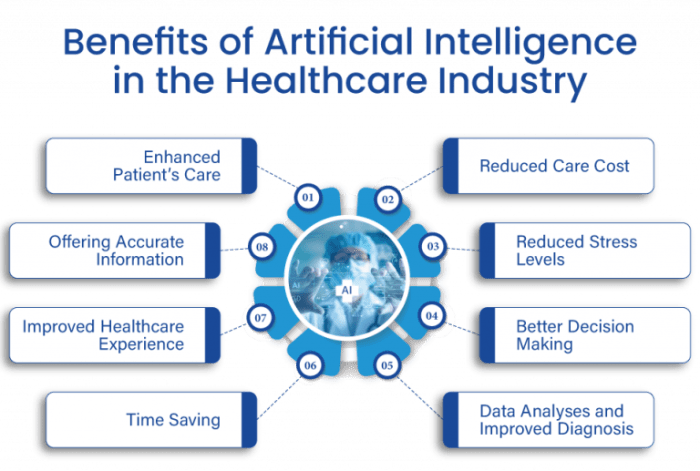
Potential Benefits of Integrating AI into Healthcare for Patients
- Improved Diagnostics: AI can help healthcare providers make faster and more accurate diagnoses, leading to better treatment outcomes for patients.
- Personalized Medicine: By analyzing patient data, AI can help tailor treatment plans to individual needs, increasing the effectiveness of treatments.
- Enhanced Patient Care: AI can streamline administrative tasks, allowing healthcare professionals to spend more time with patients and provide better quality care.
AI Applications in Patient Diagnosis
AI plays a crucial role in assisting healthcare professionals with patient diagnosis, offering advanced tools and technologies to improve accuracy and speed in identifying medical conditions.
Machine Learning Algorithms
Machine learning algorithms are widely used in healthcare to analyze complex data sets and identify patterns that could indicate specific medical conditions. These algorithms can process vast amounts of patient data, including symptoms, medical history, and test results, to generate more accurate diagnoses.
- One common application of machine learning in patient diagnosis is in radiology, where AI systems can analyze medical images such as X-rays, MRIs, and CT scans to detect abnormalities or signs of disease.
- By training these algorithms on large datasets of medical images, AI can assist radiologists in interpreting results more efficiently and accurately, leading to faster diagnosis and treatment.
- Furthermore, machine learning algorithms can also be used to predict patient outcomes based on specific parameters, helping healthcare providers tailor treatment plans for individual patients.
Natural Language Processing (NLP)
Natural Language Processing (NLP) is another AI technology that is revolutionizing patient diagnosis by enabling computers to understand and interpret human language. This allows for the analysis of unstructured data such as patient notes, medical records, and research articles, leading to more comprehensive and accurate diagnoses.
- NLP can help healthcare professionals extract valuable information from clinical notes and patient histories, facilitating the identification of relevant symptoms, risk factors, and treatment options.
- By analyzing vast amounts of textual data, NLP algorithms can assist in diagnosing rare diseases, identifying potential drug interactions, and predicting disease progression more effectively.
- Overall, NLP enhances the diagnostic process by providing clinicians with valuable insights and recommendations based on the most up-to-date medical knowledge and research.
Personalized Treatment Plans with AI
AI plays a crucial role in revolutionizing healthcare by enabling the creation of personalized treatment plans for patients. By leveraging advanced algorithms and machine learning, AI analyzes vast amounts of patient data to tailor treatments to individual needs, ultimately leading to better outcomes.
AI-Driven Data Analysis for Personalized Treatment
AI can sift through patient data, including medical history, genetic information, lifestyle factors, and treatment responses, to identify patterns and trends that human clinicians may overlook. By analyzing this data, AI can generate insights that guide the development of personalized treatment plans.
- AI can predict how a patient may respond to specific treatments based on their unique characteristics, optimizing the selection of interventions.
- Through continuous monitoring and analysis, AI can adapt treatment plans in real-time to ensure that they remain effective and relevant to the patient's evolving health status.
- AI-driven personalized treatment plans can enhance medication adherence by tailoring dosages, schedules, and types of medications to suit individual needs, reducing the risk of adverse effects and improving overall effectiveness.
By harnessing the power of AI to create personalized treatment plans, healthcare providers can deliver more targeted and effective care, leading to improved patient outcomes and enhanced quality of life
.
Remote Monitoring and Telehealth
AI plays a crucial role in enabling remote monitoring and telehealth services for patients, revolutionizing the way healthcare is delivered. Through the integration of AI technologies, healthcare providers can remotely monitor patients' vital signs, symptoms, and overall health status in real-time, allowing for timely interventions and adjustments to treatment plans.
Benefits of AI-enabled Remote Monitoring for Patients with Chronic Conditions
- Continuous Monitoring: AI systems can track changes in vital signs and symptoms, providing early detection of any worsening conditions.
- Predictive Analytics: By analyzing large volumes of patient data, AI can predict potential health complications and alert healthcare providers proactively.
- Improved Outcomes: With remote monitoring, patients with chronic conditions can receive timely interventions, leading to better health outcomes and reduced hospitalizations.
- Enhanced Patient Experience: Remote monitoring allows patients to stay in the comfort of their homes while receiving high-quality care, improving overall patient satisfaction.
Impact of AI in Expanding Access to Healthcare Services through Telehealth
AI has significantly expanded access to healthcare services through telehealth by overcoming geographical barriers and increasing healthcare reach to underserved populations. With AI-powered telehealth platforms, patients can connect with healthcare providers virtually, receive remote consultations, and access medical advice without the need for in-person visits.
This has been particularly beneficial during the COVID-19 pandemic, ensuring continuity of care while minimizing the risk of virus transmission.
Ethical Considerations and Patient Privacy
As artificial intelligence continues to revolutionize healthcare, it is crucial to address the ethical considerations and patient privacy concerns that come with its implementation.
Ethical Considerations
- AI bias: One of the key ethical concerns is the potential bias in AI algorithms, which could lead to discriminatory outcomes for certain patient groups.
- Transparency and accountability: Ensuring transparency in how AI systems make decisions and holding developers and healthcare providers accountable for their use is vital.
- Informed consent: Patients must be fully informed about the use of AI in their healthcare and give consent for their data to be used in AI-driven systems.
Patient Privacy and Data Security
- Confidentiality: Protecting patient data from unauthorized access or breaches is essential to maintain patient trust in AI-driven healthcare.
- Data encryption: Implementing robust encryption measures to secure patient data both in transit and at rest can safeguard against potential cyber threats.
- Data anonymization: Removing personally identifiable information from datasets used in AI algorithms can help protect patient privacy while still allowing for effective analysis.
Risks and Mitigation Strategies
- Security vulnerabilities: Regular security audits and updates to AI systems can help identify and address vulnerabilities that may compromise patient data.
- Algorithmic errors: Implementing rigorous testing protocols and human oversight can help mitigate the risks of errors or biases in AI algorithms.
- Data breaches: Establishing strict access controls and monitoring mechanisms can help prevent unauthorized access to sensitive patient information.
Last Recap
In conclusion, AI in healthcare presents a promising future for patients, with advancements in personalized treatment plans, remote monitoring, and ethical considerations shaping the landscape of healthcare services.
Quick FAQs
How is AI improving patient diagnosis?
AI assists in diagnosing illnesses faster and more accurately by analyzing vast amounts of patient data.
What are the benefits of personalized treatment plans with AI?
Personalized treatment plans lead to better patient outcomes by tailoring treatments to individual needs.
What ethical considerations are important in AI-driven healthcare?
It is crucial to maintain patient privacy and data security to protect patient interests in AI healthcare systems.